
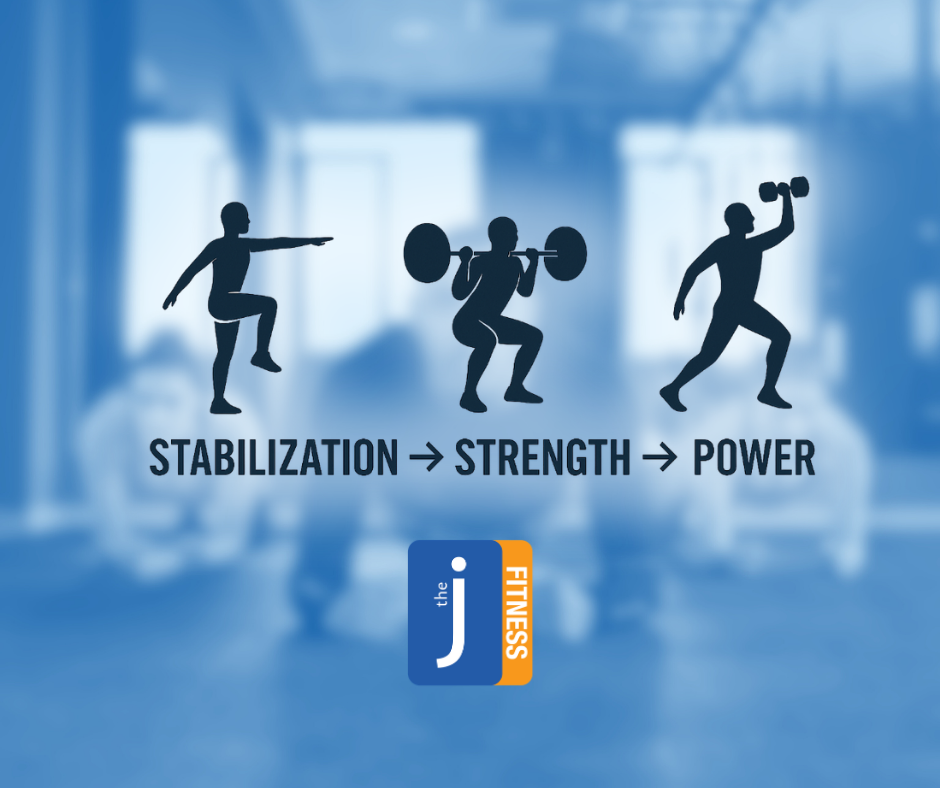
One of the biggest mistakes people make in the gym is jumping straight into heavy lifting or explosive workouts before their body is ready. The most effective training actually follows a progression: stabilization → strength → power.
Stabilization → Strength → Power
Stabilize
First comes stabilization and flexibility. This stage focuses on improving joint stability, mobility, and proper movement patterns. Many people have posture deviations from sitting, work habits, or past injuries. During this phase, exercises help activate the right muscles, improve balance, and correct how the body moves. Personal trainers at the J help our clients work through this and ensure the exercises help support and repair the issues to make the quality of life much more enjoyable and functionally safe.
Strength
Once the body is moving correctly, the next step is strength training. Now that the joints are stable and muscles are firing properly, you can safely build muscle and increase load without reinforcing bad movement patterns. This helps support the stresses of everyday life. Supports knee, hip, and joint health. Typically, these start and end with spinal issues like sciatica. We make sure our members get quality instruction on how to take care of your body long-term.
Show Your Power
Finally comes power training, where speed, explosiveness, and athletic performance are developed. This could include things like plyometrics, faster lifts, or sport-specific movements. You don’t have to be in sports to do this. Clients love to do these workouts after building a foundation because they are exciting and fun. Many people love working on their Personal Best, and this really does drive results safely with instruction.
This is where personal trainers add real value. They help identify posture issues and movement imbalances, then guide clients through this progression so the body is not only stronger, but also more balanced, resilient, and less prone to injury.
Fuel Yourself
If you want real results from your workouts, nutrition has to support your training. It starts with understanding your macronutrients — protein, carbohydrates, and fats — and how they fuel your body.
- Protein: Protein helps maintain metabolism, and support fat loss while preserving and repairing muscle. A good rule of thumb for protein is about 0.8–1.1 grams per pound of lean body mass each day.
- Carbohydrates: Carbohydrates are the body’s primary energy source, but be careful what kinds of carbs you eat. Focus on eating nutrient-dense, high-fiber carbs like fruits, vegetables, and whole grains.
- Fats: Dietary fats are essential for vitamin absorption and cell function. Unsaturated fats that come from nuts and avocados are the best for energy and health.
Next is understanding your calorie needs. Your body burns a certain number of calories at rest (your resting metabolism). From there, factor in your activity level and how often you exercise each week to estimate your daily calorie needs. If fat loss is the goal, create a small, sustainable caloric deficit so your body uses stored energy while still performing well.
Track Your Progress
The challenge for many people is simply knowing their numbers and making sure the nutrients they eat align with their goals. That is exactly where our personal trainers can help.
Using our InBody body composition machine at both our Chesterfield and Creve Coeur locations, we can measure lean body mass, body fat, and metabolism to give you a clear starting point. From there, we can help you understand the right calorie range, protein targets, and simple nutrition strategies that are easy, effective, and tailored to your goals.
If you’re curious about where you stand and what your numbers look like, ask one of our trainers about getting an InBody scan. It’s a quick way to take the guesswork out of your nutrition and training. Plus, its free!
Nick Calovich is the Vice President of Fitness & Membership at the J – St. Louis fitness center. The J offers two state-of-the-art fitness centers with convenient locations in Creve Coeur and Chesterfield.